
Why Do Telecom Devices Require 4kV Surge Protection? How Our Power Adapter Keeps Network Equipment Safe
In the telecom industry—whether in data centers or broadband access—network equipment reliability is the most fundamental requirement. Routers, switches,…
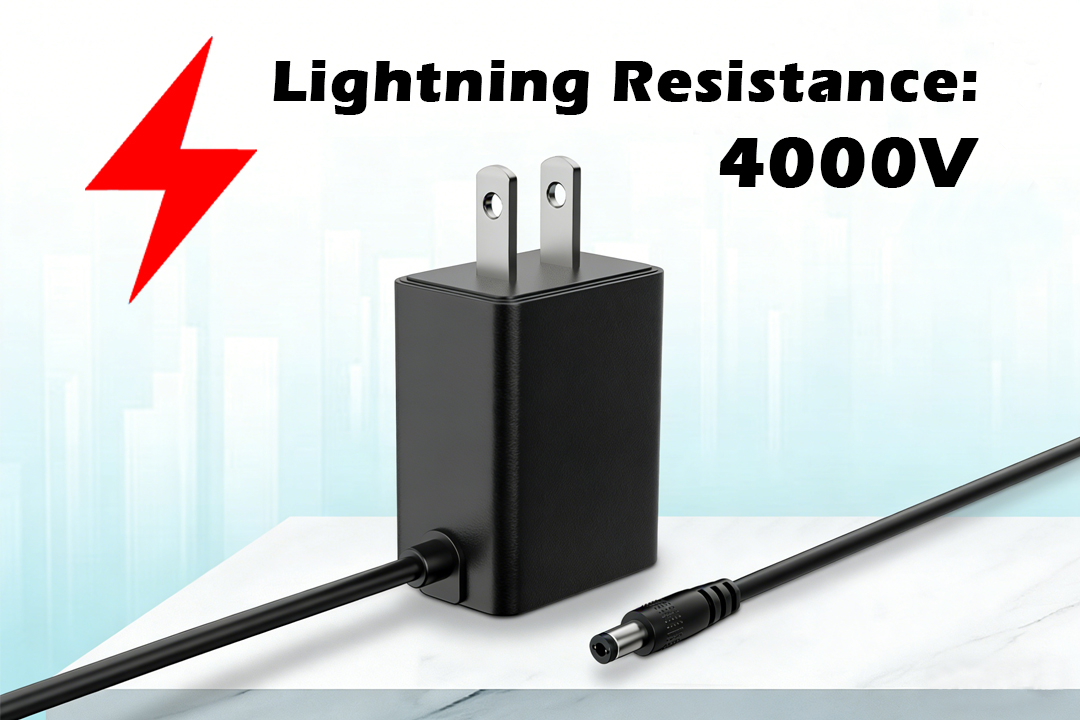
In the telecom industry—whether in data centers or broadband access—network equipment reliability is the most fundamental requirement.
Routers, switches, ONTs (optical network terminals), IP phones… these devices carry the lifeblood of daily communication. Yet in real-world operating environments, they face an invisible threat: electrical surges, especially the instantaneous high-voltage impact caused by lightning strikes.
For these network devices deployed in server rooms, telecom closets, and customer premises, the power adapter often serves as the first line of defense against lightning. In the U.S. and European markets, telecom-grade AC/DC adapters are typically required to withstand 4,000V (4kV) surge voltage.
What does this number actually mean? And how can a seemingly ordinary AC adapter withstand a lightning strike?
Let’s break it down in plain language.
In the power supply industry, many manufacturers claim their products offer “4kV surge protection.” But to customers, this often sounds like just another generic statement—after all, everyone says it.
However, the reality is: not all applications require 4kV surge protection, and not all surge protection designs can truly safeguard network equipment.
Routers, switches, ONTs, and similar network devices have a fundamental difference from ordinary household appliances: they connect to the outside world via long cables. This characteristic makes them a prime target for lightning-induced damage.
This article starts from one core question: Why do network devices require much higher surge protection standards than standard consumer electronics? We’ll explain the technical principles clearly, and then describe how our AC/DC power supply achieves 4kV protection.
I. Why Do Telecom-Grade Power Adapters Emphasize 4kV Surge Protection?
Telecom equipment is often deployed in complex environments, such as:
- Long cabling runs between server rooms
- Equipment located near outdoor antennas or along building exteriors
- Ethernet and power cables routed aerially or through conduits between buildings
These long cable runs act like giant antennas. Even if a lightning strike occurs hundreds of meters away, electromagnetic induction can generate instantaneous voltage spikes of up to 4,000V or even higher on the cables.
If the power adaptor fails to suppress this surge effectively, the high voltage can travel directly into routers, switches, and other devices, causing:
- Chip breakdown
- Device lockup or reboot
- Port failure
- Data packet loss or complete hardware failure
Therefore, in U.S. and European markets, many telecom projects explicitly require that power supplies must pass the 4kV surge test defined by IEC 61000-4-5 to be considered genuine telecom-grade products.
II. How Does a Power Adapter Achieve 4kV Surge Protection?
Many people wonder: how can a compact AC adapter actually withstand a lightning strike?
The answer lies not in “brute force,” but in a sophisticated protection circuit that absorbs or dissipates high-voltage energy in an extremely short time, preventing it from reaching the downstream equipment.
Our design approach varies depending on the power level and application scenario:
1. Low-Power Adapters (2-Pin Plug, No Grounding)
1. Low-Power Adapters (2-Pin Plug, No Grounding)
Applications: Routers, switches, ONTs, IP phones, and other desktop network equipment
Power Range: 12V 1A / 1.5A / 2A / 2.5A / 3A, etc.
These AC/DC power supplies use a 2-pin plug (no ground) . The surge protection relies entirely on differential-mode protection (between L and N) and does not depend on an external ground. The specific approach is:
- First-stage protection: A high-grade metal oxide varistor (MOV) instantly conducts when a lightning surge arrives, absorbing and clamping the high-voltage energy between the live and neutral lines, preventing it from propagating downstream.
- Second-stage protection: A transient voltage suppressor (TVS) further smooths the residual voltage, ensuring that the output to the device remains stable and safe.
This approach does not rely on external grounding; all high-voltage energy absorption and clamping occur within the power adaptor itself. It meets safety standards while effectively resisting lightning surges.
2. High-Power Power Supplies (3-Pin Plug, with Grounding)
Applications: Base stations, large-scale communication equipment, outdoor cabinets
These devices typically use a 3-pin plug (with ground) . Their surge protection employs common-mode + differential-mode dual protection:
- Common-mode protection (L/N to G): Uses the external ground line to divert surge energy directly to earth
- Differential-mode protection (L to N): Absorbs residual energy between the lines, as described above
The dual-protection architecture enables these power supplies to withstand even higher surge levels, making them suitable for outdoor or harsh electromagnetic environments.
3. Strict Component Selection
Whether for 2-pin or 3-pin solutions, we select high-grade MOVs, high-voltage capacitors, and specialized surge protection components. These components have larger safety margins, ensuring that performance does not degrade significantly even after repeated surge events.
4. PCB Layout and Isolation
In circuit board design, we deliberately increase creepage and clearance distances between high-voltage and low-voltage areas, and use techniques such as slotting and widened traces to prevent arc flash or creepage during a surge. In simple terms, we ensure that high voltage remains confined to the “protection zone” and does not harm downstream equipment.
III. What Does This Mean for Customers?
If you are a telecom equipment manufacturer, system integrator, or supply network equipment to end customers, choosing a power supply with genuine 4kV surge protection delivers tangible benefits:
- Reduced after-sales failures: Fewer returns caused by lightning or surges, especially in regions prone to thunderstorms
- Compliance with project requirements: Many U.S. and European telecom operators and data centers explicitly require AC adapters to pass 4kV surge testing in their procurement specifications
- Enhanced end-user trust: Routers and switches that drop offline due to power issues undermine network stability and erode brand confidence
IV. How Do We Validate Surge Protection?
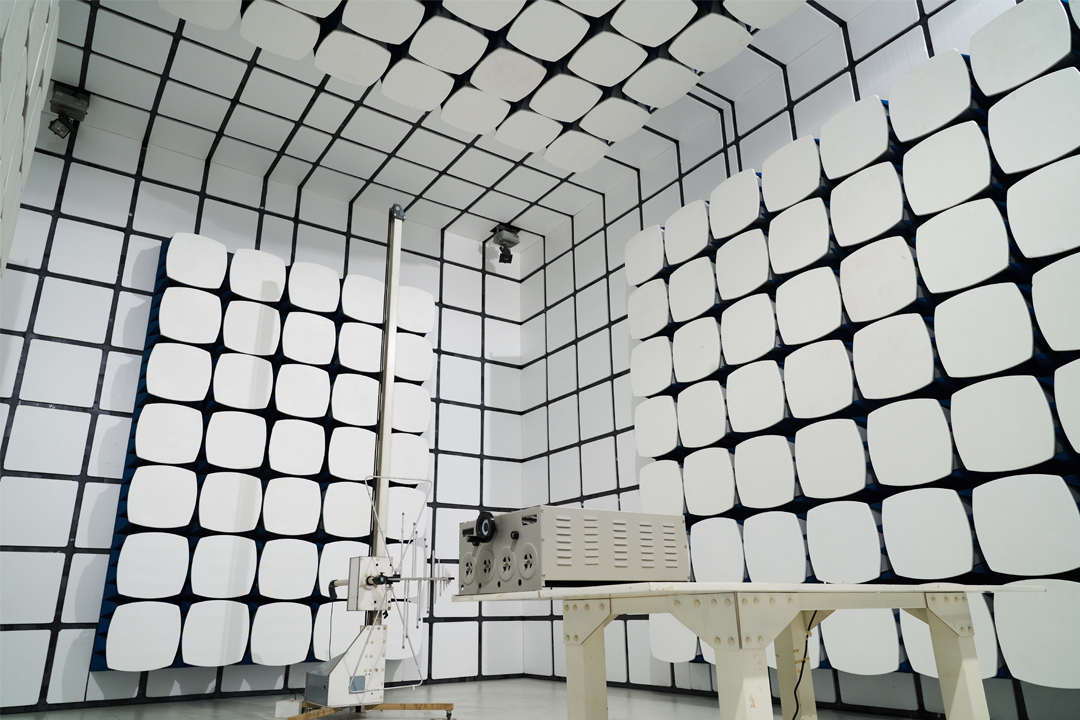
Every AC/DC adapter labeled with “4kV surge protection” is tested in our laboratory strictly in accordance with IEC 61000-4-5:
| Parameter | Specification |
| Test Voltage | 4000V (4kV) |
| Voltage Waveform | 1.2/50μs (rise time 1.2μs, duration 50μs) |
| Current Waveform | 8/20μs (rise time 8μs, duration 20μs) |
| Test Method | Varies by plug type |
| — 2-pin adapters (no ground) | Differential-mode test (L-N) |
| — 3-pin power supplies (with ground) | Common-mode test (L/N-G) + differential-mode test (L-N) |
Our circuit design uses high-grade components with a multi-stage protection architecture, ensuring stable 4kV surge test performance regardless of whether an external ground is available, thereby safeguarding downstream equipment.
Only after passing all tests—ensuring that the power adapter operates normally and output voltage remains stable both before and after surge impacts—do we classify it as a telecom-grade surge-protected product.
V. Summary
In the telecom industry, stability is competitiveness. Lightning strikes may be low-probability events, but when they occur, the resulting losses can be substantial.
A power supply with true 4kV surge protection is not simply a matter of adding more components. It is the result of a systematic design approach tailored to power level and application scenario—encompassing circuit architecture, component selection, and manufacturing processes.
For different application scenarios, we offer:
| Scenario | Plug Type | Power Range | Typical Products |
| Routers, switches, ONTs, IP phones | 2-pin (no ground) | 12V 1A,12V 1.5A,12V 2A,12V 3A,12V 3.5A | Low-power AC adapters |
| Base stations, large communication equipment, outdoor cabinets | 3-pin (with ground) | Custom power levels | High-power power supplies |
Whichever solution fits your needs, we provide the technical expertise and reliable quality to serve as a dependable foundation for your equipment.
If your network equipment is targeted at a demanding, high-standard market, or will be used outdoors or in complex electromagnetic environments, consider 4kV surge protection an essential selection criterion.
Tags

nikki
Nikki is a seasoned industry expert bringing a decade of specialized expertise in manufacturing and innovating premium power adapters for global clients.
Expert Power Solutions, Delivered.
Get weekly expert advice, technical solutions, and industry updates on power adapters from our founder. Stay informed and powered up!


Leave a Reply